
“THE MYSTERY OF THE CRESSAC CROSS †”


Based upon the positions of the three Radegonde Churches that were discovered by Charlotte Wheatley, she determined that they appeared to align with Oak Island. This author began to look at these specific churches to see if there is any pattern or relationship that is associated with them. After investigation and analysis, this author discovered that the three churches, grouped with some additional Knights Templar churches, create what appears to be a representation of the Constellation Cygnus with the “Northern Cross” asterism and “The Crucifixion of Jesus Christ”. This immediately brought to mind Nolan’s Cross, which many believe also exhibits all of these same characteristics. Does this newly discovered pattern, which this author has named “The Cressac Cross” point to a possible involvement by the Knights Templar on Oak Island? This author began to investigate this very question and discovered some important findings.
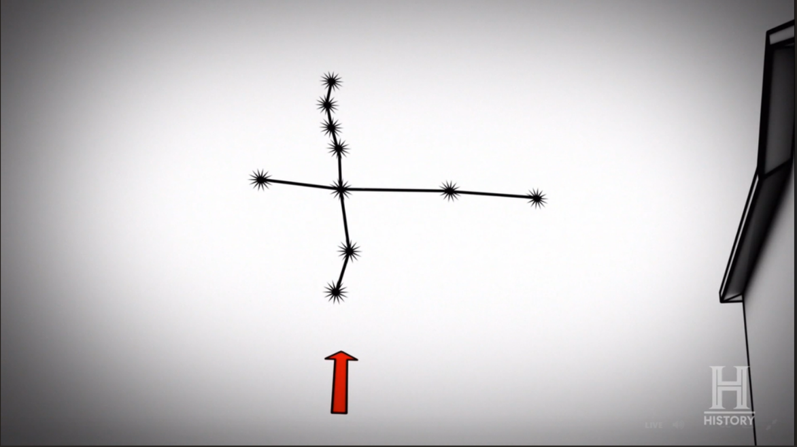


Archeoastronomer and Professor Adriano Gaspani has found that the Knights Templar oriented churches and other constructions in Europe with the Constellation Cygnus. The Knights were also Christians who believed that Jesus Christ was their savior and worshipped and venerated him. The comparison of Cygnus with its “Northern Cross” and the Crucifixion of Jesus Christ has long been made. When looking at the spine of “The Cressac Cross” you will notice that it is not a straight line. It has the appearance of a curvature that is reminiscent of a bending of the knees of Jesus on the cross. A celestial comparison is also illustrated by the brightest star in Cygnus, Deneb, which roughly translates to "the Lord comes." Christian astronomers have noted that Cygnus perfectly maps out the first and second coming of Jesus Christ. In addition, Professor Gaspani has determined that swamp stakes found on the northern part of Oak Island appear to be aligned with the setting of Deneb, and he believes they were put there as a tool for mapping and planning. He has previously mentioned that Cygnus appears to have been involved with the creation of Nolan’s Cross.

Celestial and Religious symbolism can explain using this particular formation to mark an area of importance and symbolically “point the way” to where the Knights Templar may have hidden something of great significance and value. It’s conceivable that the French Formation was the inspiration for the construction of Nolan’s Cross. The constellation of Cygnus and its asterism, the Northern Cross, can be seen in both of the formations. The left arm of “The Cressac Cross” slants heading towards Talmont. This is similar in nature to The Northern Cross. While neither Nolan’s Cross nor “The Cressac Cross” are a perfect replica, they are symbolically referencing multiple symbols. This would result in a blending of the features of both representations. It’s suspected that some stones or boulders of Nolan’s Cross may have been moved at some point. If correct, that would change the position of the formation into a more irregular shape and not the perfect geometrical representation that it exhibits today. All of these factors were enough for this author to delve deeper into the individual locations of “The Cressac Cross” and see if there were any other connections to Oak Island.
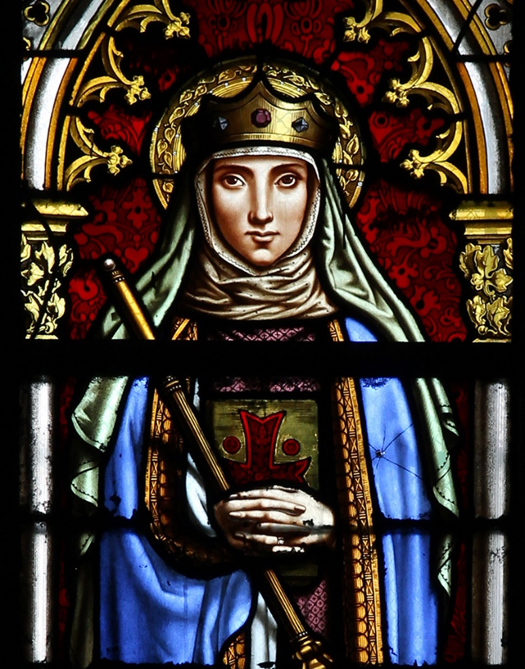
The three Radegonde churches were built in the late 11th and 12th Centuries in France, although Sainte Radegonde herself died in 587 AD. The Knights Templar became prominent in this region, with their port in nearby La Rochelle and several commanderies in the immediate area. Sainte Radegonde was a special figure to Catholics in France. The Knights Templar, a Catholic military order, admired her and became interested in her legacy. They built their vast network of commanderies and churches, frequently dedicating sites to her as the protector of seafarers and pilgrims. This is an important theme that connects other sites of “The Cressac Cross”. It was said that Sainte Radegonde had a piece of the true cross that Jesus was crucified on from Emperor Justinian II. There were rumors of other holy relics that were associated with her. Relics of the Sainte herself are reputed to be found in the Church of Sainte-Radegonde in Colomiers, in this case two phalanxes of the hand. Did any of these relics fall into the hands of the Knights Templar? Were they moved to another location for their safety? Was Oak Island the destination, and was the area marked with Nolan’s Cross to symbolize the connection between the two locations?


The first location in “The Cressac Cross” is the Sainte Radegonde Church – Saint Radegonde. It corresponds to Cone A of Nolan’s Cross. The name of Sainte-Radegonde is from a local legend where it was said that the Sainte stayed in a cave near the village. The church is located in the Charente region of New Aquitaine. It dates back to the 11th and 12th centuries AD. It has been found to align with Oak Island. As evidenced in the above photo, the interior roof is ax hewn and timbers are visible. If these are the original timbers or they exist somewhere at the church, it would be interesting to compare them with wood samples found on Oak Island for similar dating or any other similarities.
The entire Charente-Maritime region is connected to the Camino Santiago de Compostela, which is also known as the “Way of St. James”. It was an ancient pilgrimage of Christians to the cathedral of Santiago de Compostela in Northwest Spain. This is where the remains of the Apostle James are allegedly buried. The great pilgrimage started in the 9th Century and various routes crisscrossed France and extended through Europe. The Knights Templar played an integral role in the pilgrimage as they provided protection and shelter for traveling pilgrims. This association can be seen in various sites in “The Cressac Cross”.

The second location in “The Cressac Cross” is The Church of Sainte-Radegonde – Talmont Sur Gironde. It corresponds to Cone C on Nolan’s Cross. Built in 1094 and later expanded in the 12th century. Originally having a Latin cross plan, which is also exhibited with Nolan’s Cross and “The Cressac Cross”. It was built on the initiative of the Benedictines of the Abbey of Saint-Jean-d'Angély, who used astronomical features to build their abbeys and churches. The church was a stopover on one of the routes of the pilgrimage to Camino Santiago. It was reputed that the Benedictines of Saint-Jean d’Angely were in the possession of the head of St. John the Baptist. This relic was highly venerated by the Knights Templar, and the Templars were connected to the Benedictines of the area . The Templars were engaged many times defending the area. The Church in Talmont also aligns with Oak Island. It’s interesting to note that Talmont is located on the water, exactly like Cone C is on Oak Island.


Carved on the exterior arches of the church, the two side arcades represent hell and heaven. The one on the left is decorated with dragons, while the one on the right shows branches symbolizing the Tree of Life. This is very interesting because of an artifact that was discovered on Oak Island. Compendium Investigations studied the artifact that was suspected of being a French Cap badge. In our opinion the design on the artifact resembles the “Tree of Life” instead of the “Fleur de Lys”. It’s possible the metal pieces, covered with gold or silver enamel, may have adorned a chasse or reliquary box that typically housed holy relics. More of this same metal was found last season on the island. Adding to the intrigue is the idea of the Tree of Life being a hidden aspect of Nolan’s Cross. This idea of good versus evil plays throughout Knights Templar symbolism.

The third location in “The Cressac Cross” is Chapel Sainte-Radegonde – Courant. It corresponds to Cone B on Nolan’s Cross. It was first built in 1124 AD on the site of an alleged miraculous event where Sainte Radegonde, fleeing her husband Clotaire I , is said to have caused three miraculous springs to emerge through prayer. The site has become a major pilgrimage destination, attracting thousands of visitors annually on August 13. The area of Courant exhibits evidence of human settlement dating back to the Gallo-Roman period, related to its position along an ancient Roman road linking Angers to Saintes. Artifacts found in the area include coins, tegulae (Roman roof tiles), pottery fragments, and hydraulic structures. These have been unearthed in the main village and at the Sainte-Radegonde church, suggesting the presence of a Roman station less than a quarter of a mile from the road. It’s very interesting that evidence of a Roman style road was also found on Oak Island.
Records indicate interactions between the Knights Hospitaller of Saint John of Jerusalem and the Benedictines of Abbey of Saint-Jean d'Angély, who as previously mentioned, were supposedly in possession of the head of St. John the Baptist. The Hospitallers' commandery in Courant was established by the mid-12th century and expanded with Knights Templar properties in close proximity following their suppression. This church also aligns with Oak Island. It’s interesting to note that this location is reminiscent of the natural wells and springs of Oak Island.

The fourth church is a newly found location in “The Cressac Cross”, The Saint Nicholas Church of Essards. It corresponds to the Headstone on Oak Island. The church was built in the twelfth century. It was Latin cross-shaped initially, the same as in Talmont, which was compared to both cross constructions. The property and commandery were directly held by the Knights Templar before the Order's dissolution. It was then transferred to the Knights Hospitaller. The church suffered significant damage during the French Wars of Religion in the 1500’s. This also could have been a time when holy relics were moved for their safety because of frequent raids by the Huguenots who were destroying such items at the time. The location of Oak Island as a destination for holy relics may have already been known for such a purpose by a select few.

The Church is dedicated to Saint Nicholas (270–343 AD) who was a bishop from Myra, which is modern-day Turkey. He was known for his generosity and defender of the Christian faith. He inspired the creation of Santa Claus. He is the patron saint of children, sailors, and merchants. This is a very similar veneration to Saint Radegonde. In the 11th century, Saint Nicholas’s remains were located in Myra. Fearing they would fall into the hands of advancing Islamic armies, a group of merchants and crusaders removed his bones and brought them to Italy. Knights Templar chronicles suggest that they played a prominent role in protecting and funding the transfer of such holy relics throughout Europe. Because the Knights Templar were heavily involved in protecting pilgrims traveling to the Holy Land, they developed a deep devotion to Saint Nicholas. In regions where the Templars held immense influence, many churches and commanderies were dedicated to him. A story regarding Saint Nicholas has a connection to the Headstone on Oak Island.

The legend of "Saint Nicholas and the sword" is the oldest recorded story of Saint Nicholas. As the Bishop of Myra, he intervened by taking the sword from an executioner's hands to save three innocent men from being executed. During a period of unrest in the Roman Empire, three imperial generals were sent to restore order but were unjustly sentenced to death. Nicholas learned of the execution and intervened. He grabbed the executioner's sword, threw it to the ground, and demanded the men’s release. The prefect confessed, and the charges were dropped. These events are detailed in the “Praxis de Stratelatis” or “The Story of the Three Generals”, which is the oldest known account of Saint Nicholas's life. Nicholas is sometimes depicted holding a sword. Isn’t interesting that the location of the Headstone on Nolan’s Cross, depicts a human face with a sword emblazoned on it, and corresponds with the church dedicated to St. Nicholas in “The Cressac Cross”?


The fifth location in “The Cressac Cross” is the newly identified Chapelle templière d'Angles, or Chapel of Saint John of Angles. It corresponds to Cone D on Oak Island. It is a 12th-century medieval sanctuary located in Salles-d'Angles. It is the last surviving vestige of one of 33 Knights Templar commanderies in the area and features original medieval graffiti, including Templar and pilgrimage markers left by pilgrims on the Camino Santiago de Compostela. The chapel is dedicated to Saint John the Baptist, again an integral figure to the Templars. Built around 1150–1160, this sanctuary was once part of a larger Templar commandery attached to the Grand Priory of Aquitaine. The chapel also has an interior ax-hewn wooden roof. It would be very interesting, as mentioned with the Saint Radegonde Church in Sainte-Radegonde, to see if any of the original wood used at the church is available and can be compared to examples found on Oak Island for any similarities.

The sixth and last location in “The Cressac Cross” is the Templar Chapel of Cressac - Saint Genis. It corresponds to Cone E on Oak Island. This chapel was built between 1150 and 1160 AD. The spot was chosen because on the property existed a well that was claimed to have never run dry. This is interesting because the Eye of the Swamp is a natural spring that was created by a fissure that developed over time that perpetually flows water into the Swamp on Oak Island. Could this have attracted the Knights Templar to the island as a place of special importance to them? The chapel is where the Knights Templar built their commandery and settled on the pilgrimage route to Camino Santiago de Compostela. The current chapel is the only part of the commandery that still exists. Inside the chapel are exquisite frescoes painted in ochre that have stood the ravages of time. Although some sections have become worn and have disappeared, many still exist. Several geometric shapes and Templar symbols are present which are very recognizable to those familiar with Oak Island.

The first fresco that caught this author’s attention is what appears to be a Knights Templar ship on the west side of the chapel. It was not common for the Knights Templar to depict ships in this way, with only one other known example in Italy. Could this depiction at Cressac symbolize a voyage west to the New World from France by the Templars? Could they have taken holy relics associated with Sainte Radegonde and others and hid them on Oak Island?

The next fresco that caught this author’s attention involved a depiction of St. George and his battle with the dragon also on the west side of the chapel. St. George was the patron saint of the Knights Templar. During the Battle of Antioch during the First Crusade in 1098, there were reports by the Knights Templar of a vision of St. George leading an army of white horses that turned the tide of the battle. This is how he became their patron saint. This depiction came to symbolize the battle of good versus evil. It was adopted by Freemasonry and the Order of the Garter in England. The Order of the Garter medal that was brought forth by the late James McQuiston which depicts St. George and the Dragon, was found near Oak Island at New Ross. Is there a connection between the Oak Island area being a special location with a profound importance to the descendants of the Knights Templar?


Beneath the depiction of St. George there are geometric patterns that resemble a cross with four dots. This symbol is associated with the HO Stone that was found on Oak Island at Joudrey’s Cove in 1936 by Gilbert Hedden and his crew. This is also observed on another fresco on the north side of the chapel depicting a Knight Templar on horseback with the same symbol on his shield. This symbol was also on the cover of the book that Sainte Radegonde carried that was related to conveying hidden knowledge. Could all this be related to the mysterious HO Stone that has confounded researchers for almost a hundred years?


On the beautiful east side of the chapel, the three windows signify the Trinity, which many believe have a tie to Nolan’s Cross and the HO Stone on Oak Island. On the same wall there is a depiction of the Archangel Michael and the weighing of souls regarding good and bad deeds for final judgement. This is interesting because the Archangel Michael was also part of symbolism associated with his battle of the slaying of a dragon which was symbolic of Satan. Again, this symbolism appears to have great importance to the Knights Templar and appears and reappears in different forms through time with their descendants.

Also on the east side of the chapel is a very interesting symbol very recognizable to Oak Island researchers. The entire symbol is reminiscent of the cross with four dots found on the HO Stone. In this case each quadrant, within this Templar Cross, has a particular symbol associated with it. The first in a clockwise direction is the eight-pointed star. This symbol was known to have been of particular importance to the Knights Templar and later Freemasons. There is a carving of an eight-pointed star in Bedford Barrens in the Halifax area of Nova Scotia, which is close to Oak Island that has been speculated as being tied to the island. The 8-pointed star was associated with the sun to the Mi’kmaq people of the area.
The two symbols in the other two quadrants are the circle with the dot, which was found on the HO Stone on Oak Island. The circle with the dot typically has been associated with gold or the sun. It is also possible that the circle with dot has a religious connotation and represents the Father or God in the Christian Trinity. The symbol is also part of the Monad symbol of John Dee who may have discovered this connection with the Knights Templar. Is it possible that Dee and his associates investigated the island in the 1500’s for a possible deposit from the Knights Templar? In turn, were they involved in a newer deposit hiding holy relics that were in danger at that time, during the French Wars of Religion?

The next symbol on the wall is the Masonic “A” that has been detailed by Researcher Scott Clarke. The “A” in the church appears to be very similar to the Masonic “A”, which depicts a Masonic Compass and Square. The symbol was used by surveyor Charles Morris on the 1762 map of Oak Island and Mahone Bay. Scott suggested that the same symbol was on the “Titulus Crucis” or “Title of the Cross” that is located at the Basilica of the Holy Cross in Rome. It houses some sacred relics which are claimed to be associated with the Passion of Christ. These include the sign or “Titulus Crucis” reportedly placed on top of the cross, a piece of the true cross, and an alleged nail used to crucify Jesus Christ. Scott then suggested that he believed that it’s possible that a piece of the “True Cross” may have been included in a Templar treasure buried on Oak Island. This further reinforces the possibility of a sacred relic being placed on Oak Island.


The south wall of the Chapel has the hollow mark of a "penitent's hand" on a stone. The symbol was placed there for those wanting forgiveness, as they would place their hand on the stone. This was also a feature observed at The Templar Chapel at Angles. The hand was recognizable by the pilgrims of the Camino Santiago de Compostela who stopped there. As previously mentioned, The Knights Templar helped pilgrims travel to Camino Santiago de Compostela by providing them with protection and lodging along the way. It appears that the Cressac Chapel was a stop on the pilgrimage and the hand symbol marked the location. It’s also interesting to consider this hand symbol when thinking of the Lead Cross found at Smith’s Cove that has a long arm with a hand that stretches down to the end. This is also reminiscent of a crucifix that represents Jesus with his arm pointing down. An example is found in Spain at the Church of San Juan in Furelo, on the route to Camino Santiago. It is called “Cristo de la Mano Tendida” (Christ of the Outstretched Hand). It centers on several stories of Jesus forgiving sins or granting prayer requests. Could the Lead Cross of Oak Island be based on these symbols? Was the cross also a symbol of participation and help on the way to Camino Santiago? Did a Knights Templar wear this cross to help pilgrims? Did a Knight drop it on Oak Island?

Is it possible that the Knights Templar moved treasure and sacred relics safely through their network of churches that comprised “The Cressac Cross” to their Port in La Rochelle and then on to Oak Island? The pattern of such a clandestine operation goes in a line traveling up through “The Cressac Cross” churches running northwest in southern France. This author then discovered something that moved the needle of coincidence definitively to intent. This involved ancient structures that predated “The Cressac Cross” Church locations.


This author discovered that a dolmen was located in close proximity to the Angles Church location on “The Cressac Cross”. A dolmen is a megalithic structure that typically sees one large stone being supported by multiple smaller ones to create a tomb, which forms a table-like structure. Most dolmens were built between 5000 to 2000 BC. They can be found all over the world. It is believed that dolmens were built as burial monuments. Some dolmens and other megalithic monuments have been found to have been intentionally aligned with astronomical objects, particularly the sun, moon, and specific star constellations. After noticing the example at Angles, this author began noticing more. In fact, in close proximity to every one of “The Cressac Cross” churches was a dolmen, noted by the red dots on the map. It appears that the pattern made by the dolmens resembles the flying bird of Cygnus. “The Cressac Cross” appears to have been constructed using these locations as a model, then reconfigured into a combination of Cygnus and The Crucifixion of Jesus Christ. This, along with the dating of the churches, makes the Knights Templar and the Benedictines of the Abbey of Saint-Jean-d'Angély, the prime suspects for a purposeful construction with intent based on the more ancient construction of the flying bird exemplified by the dolmens.


This author then noticed something remarkable about another ancient construction. It was long thought that the Great Pyramids of Giza were aligned with Orion’s Belt in the constellation of Orion. It has been demonstrated by Researcher Andrew Collins that the alignment appears to be a better match for the Constellation of Cygnus. When comparing the two formations, “The Cressac Cross” at Église Sainte Radegonde Talmont sur Gironde corresponds with Menkaure of the Great Pyramids of Giza. The Chapelle templière d'Angles corresponds with Khafre, and the Chapelle Sainte-Radegonde – Courant corresponds with the Great Pyramid. This would indicate that “The Cressac Cross” was intentionally planned and built not only to resemble the constellation Cygnus but also shares the same positioning as the Pyramids of Giza, which were built between 2600-2500 BC. This demonstrates a high level of technical expertise and knowledge by the Knights Templar and Benedictines.
The question becomes how was Oak Island involved? It has been noted that on the celestial globe and the corresponding terrestrial globe, the Mahone Bay area matches the position of Cygnus. This would provide a comparable destination on earth. There was an ancient belief that the human soul was transformed into a bird at death that corresponded with Cygnus, and the Milky Way was the road or river to the afterlife. The flight of this bird was the way in which the dead were able to reach “heaven”, “north beyond the north wind”. What better place could the Templars choose to bring holy relics, sacred knowledge, or a special treasure than to an area symbolically known as “Heaven on Earth”? This author has been very skeptical of the Knights Templar involvement on Oak Island in the past. This author can honestly say that after researching and discovering the information in this report, it appears to be well beyond a coincidence that all these features are related and point to a possible Knights Templar involvement with Oak Island.
This author would like to thank my colleagues for their previous work that went into the development of this paper. Charlotte Wheatley, Erin King, Scott Clarke, and Andrew Collins. Not to mention other researchers that have worked on Nolan’s Cross that helped shape this author’s findings, including Fred Nolan, Petter Amundsen, Brian Pharoah, Corjan Mol, Christopher Morford, and Chris Donah. If there are others I failed to mention please excuse the omission.
Look for weekly articles from this author regarding major discoveries and interesting information that is covered in Season 14 of “The Curse of Oak Island”. If you have a question or have a theory regarding the Oak Island Mystery you’d like to share, please send us an email at theoakislandcompendium@gmail.com
Tune in to the Season Premiere of “The Curse of Oak Island” on Tuesday, November 10, 2026, on the History Channel in the United States and on Sunday, November 15, 2026, in Canada.
Good day from Daniel of the Compendium


