
SEASON 13, EPISODE 24, “OVERSEAING THE DIG” EPISODE ANALYSIS BY DANIEL SPINO


In this week’s episode, “OVERSEAING THE DIG”, the show began with the Oak Island team continuing their trip in the Azores as they visited the Church of Our Lady of Conception on Terceira Island. They stated the church was built around 1474 and mentioned that the it looked like a typical church except for an engraving that appeared to show a Goose Paw symbol that the team believes connects with the Knights Templar. This led the team to speculate that through the Order of Christ a Templar treasure could have passed through the Azores to Oak Island. Please see the Analysis for more information.


The action shifted to LOT 18, where the Oak Island Team went to search through the spoils from the Money Pit that was left there by Robert Dunfield in the 1960’s. Metal Detectorist Katya Drayton was joined by Marty Lagina to check through the spoils for any missed treasure. After some searching Katya had a hit and found what appeared to be another piece of what the team called a “French Cap Badge” that they found in 2018 on Lot 21. This is interesting because the Compendium investigated this “French Cap Badge” and discovered some interesting information that this author will detail in a separate article.
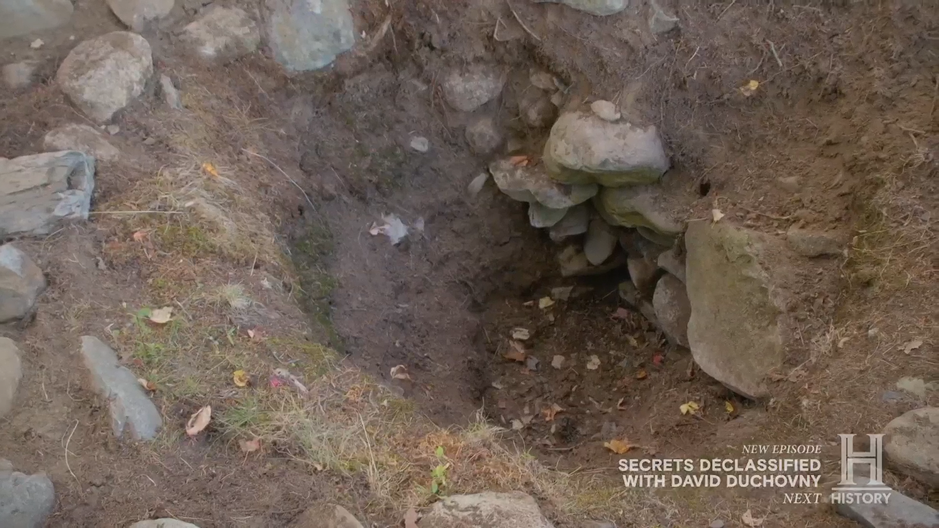

The action then took us to LOT 5, where the Oak Island team continued to excavate the area that was thought to be an old well by past lot owner Robert Young. Archeologist Fiona Steele mentioned that the Archeological team has excavated more of the feature and it appears to have stacked rocks and it may be another feature than what they originally thought. Marty was asked to use the excavator to dig a trench beside the feature to give the Archeology team a head start in excavating the area in hopes of figuring out what exactly it is.


We were then taken back to the AZORES, with the team meeting at Grota do Medo to talk to Historian Dr. Felix Rodrigues, who would show them some features of this area. Dr. Rodrigues took them first to an area that had what appeared to be a slotted rock on the sides that looked like notches. Rick Lagina thought it resembled the boulder on Lot 8, with the spaced stones that supported the boulder. Although, Dr. Rodrigues explained that the notches were used astronomically to align sunsets and sunrises. He stated that this was from about 2000BC. Dr. Rodrigues then took them up the basin where he showed them a feature that he described as a ceremonial well. The team thought it was similar to the well on Lot 26, which Dr. Spooner suggested connected to the Norse. The ceremonial well was dated from the late 1100’s AD per Dr. Rodrigues. This suggested to the team that this could have been the Knights Templar.


We were then taken to back to LOT 5, where the Oak Island Team continued their excavation of the circular feature once thought to be a well. The team progressed in excavating the feature which showed that the rocks seemed more scattered at the top of the feature and more compact at the bottom. It seemed to form a wall and a foundation which was buried. They commented that this reminded them of the round feature that they previously discovered because it resembled it so closely. It was mentioned that it was very close to the ocean, which Fiona stated that it had close access to Mahone Bay for whatever it was used for. It seems at one time, it was very visible and not obscured in any way but then filled in and hidden at some point in time.


The action took us back to the AZORES, where the Oak Island team traveled to Biblioteca Luis Da Silva Ribeiro to meet with Numismatist Alberto Silva. Silva was asked to inspect the so called, “Pitblado Coin” to render his opinion on it. He mentioned that from the die of the coin he could tell it was minted somewhere between 1369 and 1371. He also stated that it was minted in Lisbon by the “L” that was on the coin. He mentioned it was minted during the Fernandine Wars and thousands were minted but only 100 are known to survive. It was then speculated that the “Missing” coins were probably buried on Oak Island. Although it should be noted that it is very common for old coins to have been melted down and repurposed or also lost over time.

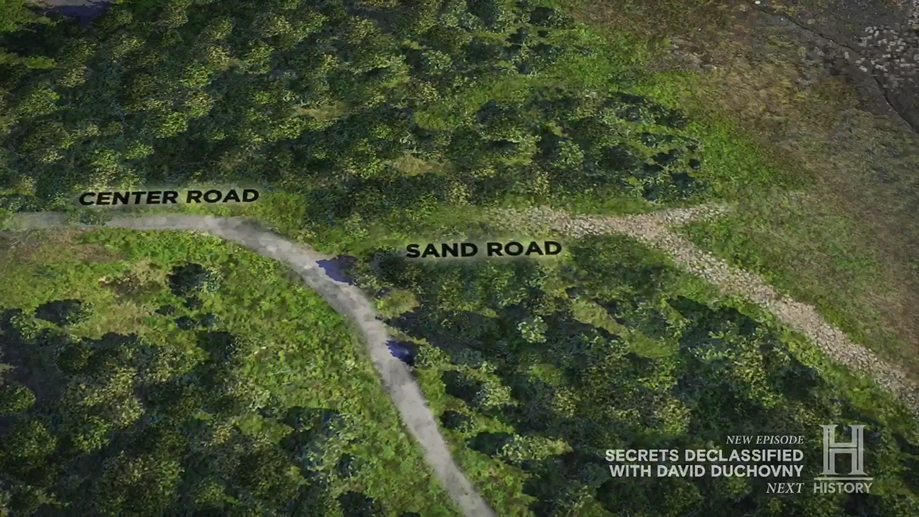
The scene shifted to the WAR ROOM where members of the Oak Island team met to discuss the trip to the Azores and what happened on the island during this time period. The places visited and features found in the Azores were presented and they think its possible that a Templar treasure was taken through the Azores to Oak Island. Marty explained the Sand Road search to the team and stated that this seems to be how treasure was transported across the island. Although in this author’s opinion it appears this was the lot boundary marker for the 1762 Charles Morris Survey of Oak Island.
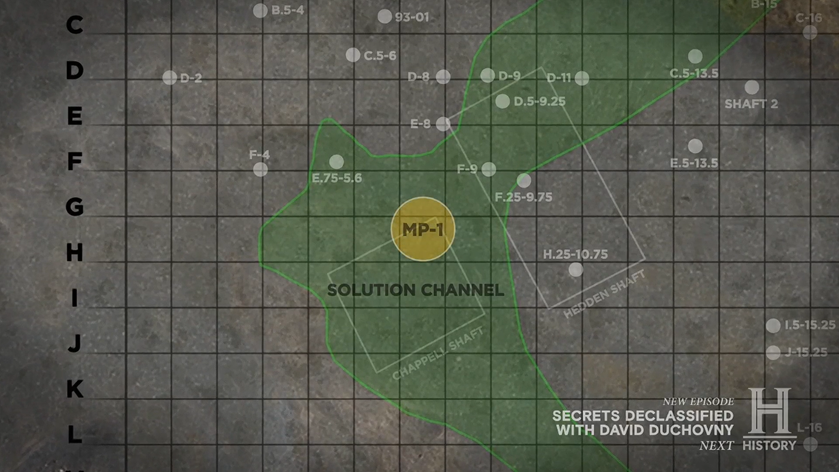

The episode concluded at the MONEY PIT where the Oak Island team began to drill in the new borehole that they have named MP-1 or Money Pit 1. The area is very close to both Karma-1 and Top Pocket Find-1. SPC Canada and Choice Drilling have been working to reinforce the area to make it as safe as possible to complete this dig, which was described as giving the team their best shot to find treasure. It was noted that the silver readings in this area were the highest registered from the water testing. It will be the last caisson of the year. Spoils were shown being brought up with the team beginning to search through them leading to next week’s Season Finale.
DANIEL’S ANALYSIS AND COMMENTARY:


During this week’s episode, the Oak Island Team visited the Church of Our Lady of Conception on Terceira Island in the Azores. Inside the church was a carving that the team recognized as looking like a goose paw symbol, which is connected to the Knights Templar. The history behind this carving in the church is very interesting. The symbol itself is called a Christogram which is a representation of Jesus Christ. The letters “I H S” are the focal point of the symbol. These letters stand for the first three Greek letters (ΙΗΣΟΥΣ) of Jesus’s name: iota (Ι), eta (Η), and sigma (Σ). The center of the symbol exhibits the letter H with the Cross above it. It is often associated with the Latin phrase, “In Hoc Signo Vinces”, “In this sign you shall conquer” by Constantine. It should be noted that sometimes the variant “I H C” was also used, as it originated from the Byzantines because their Sigma looked more like a “C”. This is how it is believed the saying “Jesus H Christ” developed.
Early Christians used these letters as a symbol for Jesus Christ from 200AD and it continued through time. It began being seen on coins in the late 600’s AD. By the 1100’s it became more common and by the 1300’s it started appearing in English documents. In the 1400’s Saint Bernardino of Siena began using the symbol with the blazing sun motif in the background. In 1541, St. Ignatius of Loyola adopted the symbol as the 1541, St. Ignatius of Loyola adopted the monogram as the official emblem of the Society of Jesus, the Jesuits. It was at that point a cross and three nails at the bottom which symbolized the crucifixion began being used. This started a worldwide use of this symbol in art and architecture. As the Jesuits did not arrive in the Azores until the late 1500’s, it would seem that this carving in the church did not originate until after that point. Until Next Week…
Please follow our weekly episode analyses during Season 13, along with articles from the original “Compendium/Blockhouse Blog”, and special investigations and features involving Oak Island. Feel free to reach out to us for questions, comments, information and any theories to our email, theoakislandcompendium@gmail.com
Good day from Daniel of the Compendium!
THE OAK ISLAND COMPENDIUM © 2026


