
SEASON 13, EPISODE 19, “AXIS OF MEDIEVAL” EPISODE ANALYSIS BY DANIEL SPINO
Updated: Apr 1


In this week’s episode, “AXIS OF MEDIEVAL”, the show began on LOT 8, where the Oak Island team is continuing their excavation of the area beneath where the large boulder was resting. Archeologist Fiona Steele had been working in the area and described that she removed what she called “Pinner Rocks” from the bottom of the cavity. She was having difficulty moving larger ones and asked if anyone could help her. Alex Lagina volunteered and moved one of the larger stones. It was noted that there was dark soil under it, and also fine powder in different spots. This transitioned into blue clay and then a mortar between the rocks. The team was baffled by this structure and wondered if a tunnel is underneath. The plan is to complete a bisection of the feature to see how it was constructed and to take soil samples for testing and analysis.

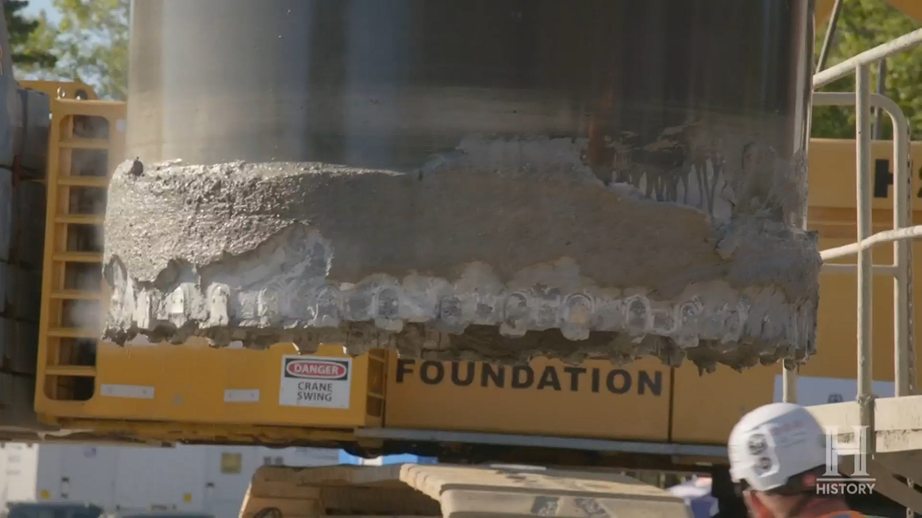
The action then took us to the MONEY PIT AREA, where the Oak Island Team continued its drilling operation in the TPF-1 Shaft. The team has reached a depth of 167 Feet where the oscillator drill reached something hard, which is the Gypsum ledge around the Solution channel at a depth of 150 to 170 Feet. The heat could be seen coming off the oscillator drill as it had been cutting through the rock.


We were then taken to the WAR ROOM, where the Oak Island Team met with Dr. Chris McFarlane of New Brunswick University who shared his laser ablation analysis on the lead decorative piece found on Lot 5. Dr. McFarlane said the artifact was encrusted with sodium rich material and had elevated silver content. He said that the lead dating precluded known activity in North America and placed the source to Central Europe, specifically France, Great Britain, or Germany. He said it matched isotopically to the Lead Scalloped Piece from Lot 5, which has gone from being called a Roman Barter Token, to Lead Barter Token, to now the Lead Scalloped Piece. This author believes it was a whirligig/buzzer, which was a toy. The disc was also isotopically compared to the Cross found at Smith’s Cove and other lead pieces found on the island. The use and reuse of lead spanned hundreds of years, so these objects found on Oak Island may have come from an old source of lead, but it is difficult to say when they were made into their present form. Most are consistent with a date range in the 1700’s.


We were then taken to THE LAB, where the Oak Island team met with Blacksmith Carmen Legge to discuss the iron chains found in the spoils of the Karma 1 Shaft in the Money Pit area. Carmen mentioned that he believed the chains were used to create a sort of basket to wrap around something to raise and lower it down a shaft. He thought it was a generic chain design although one of them had a bend in the middle that could indicate it was working with something very heavy. He mentioned that they were made by different blacksmith’s. Carmen did not state a date, but Archeometallurgist Emma Culligan said the test results indicated a late 1600’s to mid-1700’s date range for the chains. This then led to speculation it could have been from Duc d’Anville and his Armada who went to North America to attack the British in 1746.


The action shifted to LOT 5, where the Oak Island Team continued their excavation of the round feature near the shoreline. While working in the area, Archeology Assistant, Tansy Rudnicki found an interesting artifact. She showed it to Archeologist Laird Niven and he said that it appeared to be metal that had a finished edge. He said he thought it may be the rim of a button. It was very tiny and thin, but it appeared to be a part of a button. It would be sent to the Lab for testing and further analysis.
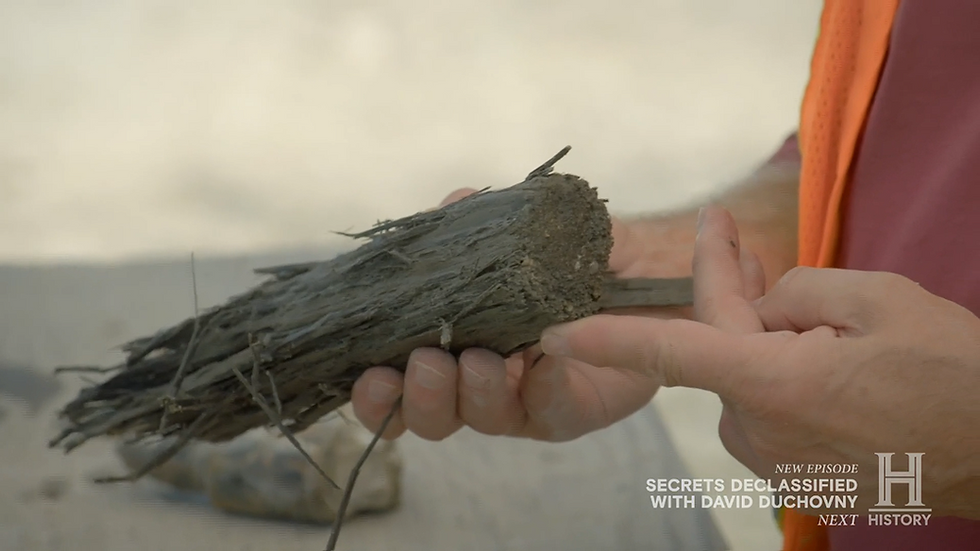

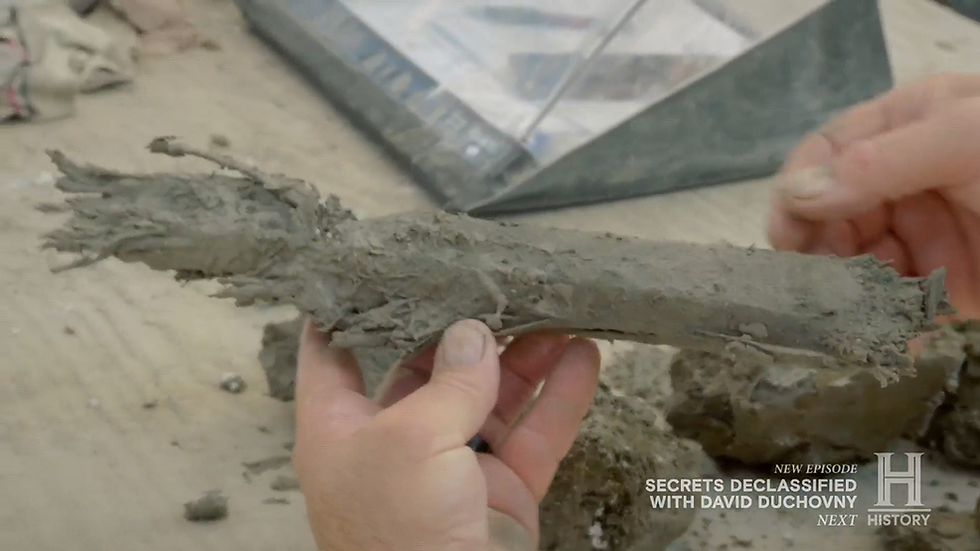
The scene shifted back to the MONEY PIT AREA, where the Oak Island team continued its drilling operation of Borehole TPF 1 which has penetrated the rock ledge into the Solution Channel. The drill reached the depth of 175 Feet into the void, and the Hammer grab was going to be used to retrieve the spoils. In the spoils, Metal Detectorist Gary Drayton found a piece of wood that appeared to be cut and shaped. The team speculated it could have come from the Chapell Shaft collapse in 1931. The team conducted the “Dan Blankenship Test” of seeing if the wood would sink if it was old and float if it was more recent. It sank. This confirmed to the team that collapses caused debris to fall into the Solution Channel. The team reached a depth of 187 Feet. The team resumed the next day and continued to a depth of 193 Feet and Gary detected a piece of iron in the spoils. It was very encrusted and would be sent to the Lab for testing. Continuing to 206 Feet another piece of wood was found. The team reached the bottom at 215 Feet but did not find any signs of treasure, although a small piece of a button head from a drill was found from a different drilling operation.


The episode concluded at the WAR ROOM where the Oak Island team met with Professor Adriano Gaspani and his interpreter Marzia Sebastiani, along with Researcher Emiliano Sacchetti. Professor Gaspani was giving his presentation entitled, “Stars Across the Atlantic: France, Portugal, and Oak Island. Trying to decode the enigmatic Lot 5 Stone Feature and Swamp Stakes”. Professor Gaspani had previously stated he believed the stakes in the Northern Swamp were aligned astronomically with the stars Deneb, Sirius, Hamal, and the Pleiades. He stated that he believed that Sainte Radegonde Church also had this stellar alignment along with the round structure on Lot 5. He stated that he believed the Lot 5 structure could be dated to 1236 AD. It should be noted that Emiliano, when first seeing the Lot 5 structure, speculated it was a Templar Church. There has been no evidence found at the site to support this idea archeologically. The feature is consistent with a 17th Century to mid-18th Century build and occupation. A connection was then speculated between the Sainte Radegonde Church in Talmont and the Talmont reference on the Oak Island Map put forth by the late Zena Halpern thus giving credence to the map’s authenticity. Please see the analysis for further information regarding this subject.
DANIEL’S ANALYSIS AND COMMENTARY:

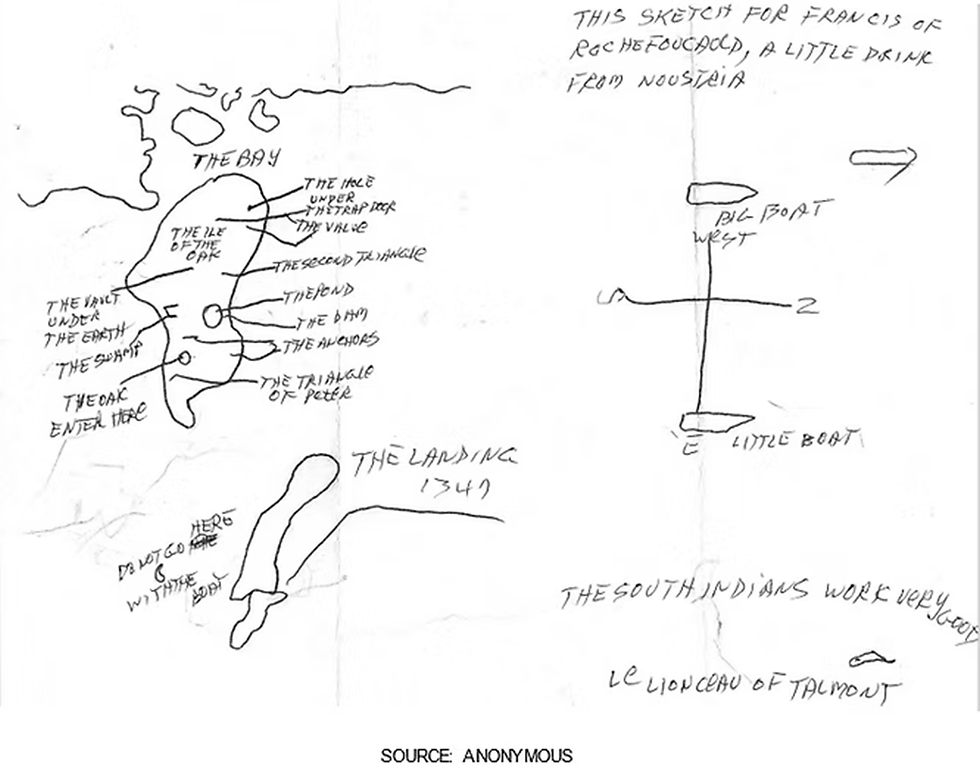
During this week’s episode, Archeoastronomer Professor Gaspani agreed that the three Radegonde Churches aligned with Oak Island, which was discovered by my colleague Charlotte Wheatley. He was more specific and indicated that he believed that they had a stellar alignment with the Lot 5 round feature. It was then suggested that this corroborated the “Oak Island Map” brought forth by the late Zena Halpern, found in the possession of Don Ruh. The problem is that the “Oak Island Map” is unequivocally,100% fabricated and was created to provide a false narrative regarding Oak Island. It is also not a copy of another map, which some researchers have claimed. The map, along with La Formule cipher were found together. The common thread between the two documents is that they have a French origin, with the implications that it was associated with the Knights Templar visiting what was is now Nova Scotia in 1347. Some researchers assert that 1347 was not a date but a measurement. We find this explanation also lacking, due to the fact that the original translation of the map, made by Don Ruh, describes it as, “The Landing, 1347”. To Mr. Ruh’s credit, he has acknowledged that the map is fabricated but blames Dr. Bill Jackson for its creation. The issue with this is that this author believes Dr. Bill Jackson was a fictional character that was created to be a part of a novel that was being written at the time.
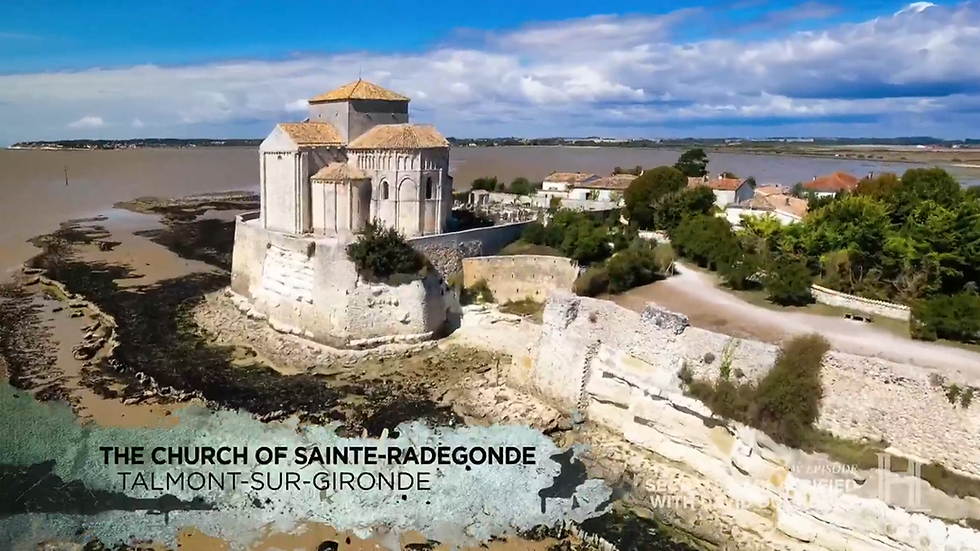
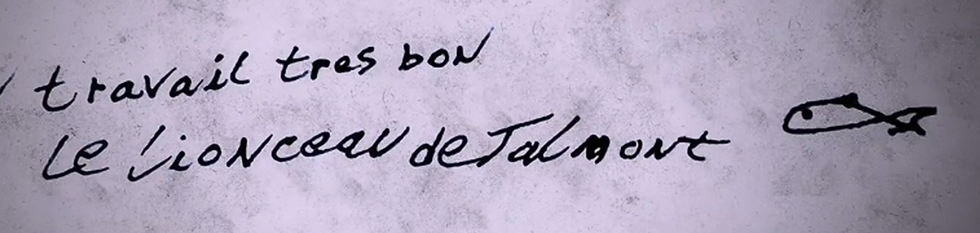
As for Charlotte’s research, it is this author’s opinion that the fabricator of the “Oak Island Map” knew nothing about her alignment that she discovered and it was only a coincidence occurring between her research and the “Oak Island Map”. It began by Charlotte looking at the Talmont reference on the map as due diligence in investigating its authenticity. It’s important to note that there are two different Talmont’s in France. One is called Talmont sur Gironde and the other is Talmont Sainte Hilaire, both in Western France. Talmont sur Gironde is where the Sainte Radegonde Church is located, which is associated with the alignment and is located on the southwest coast. Talmont Sainte Hilaire is where Château de Talmont is located and is north of Gironde and not directly on the coast. It is this author’s opinion that the fabricator of the map conflated both locations into one. For instance, on the “Oak Island Map” it lists the name, “Le Lionceau de Talmont”. As put forth by other researchers, like Gretchen Cornwall, “Le Lionceau de Talmont” was the nickname of a real person named Louis I of Thouars, Viscount of Thouars, Count of Dreux, Lord of Talmont and Mauléon. He lived from 1310-1370, which coincided with the date listed on the “Oak Island Map” of 1347. He was associated with Richard the Lionheart who had controlled the Château before him. The “Rochefoucauld Grail” details Talmont by saying that some Knights Templar ships sailed out of the area, as well as La Rochelle carrying their treasure.
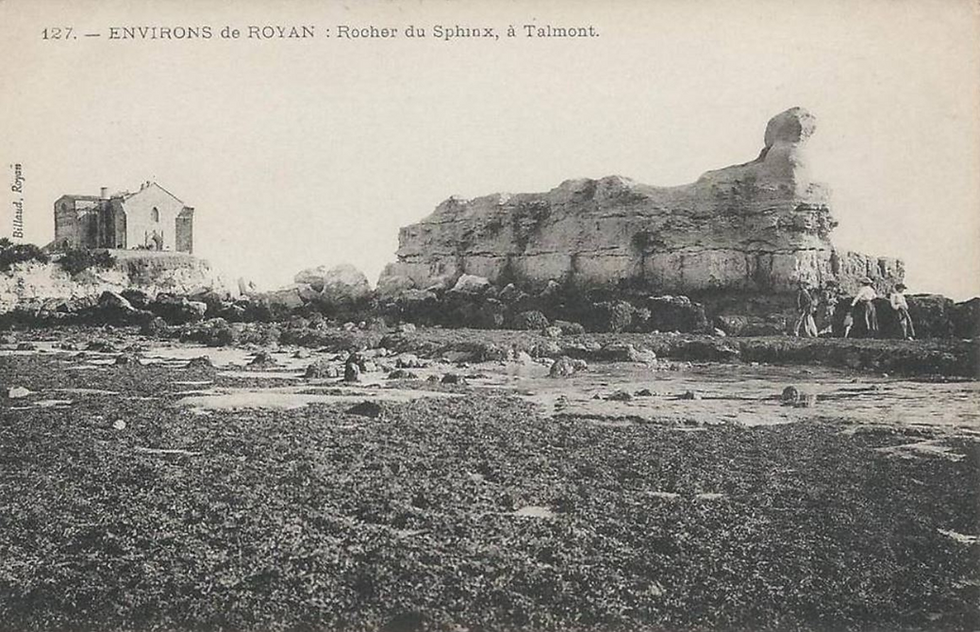

In this author’s opinion the fabricator of the “Oak Island Map”, during their research, viewed various postcards of Talmont sur Gironde from the early 20th Century and believed they were also referencing Talmont Sainte Hilaire. In these postcards you can see, “The Sphinx of Talmont”. This was a rock formation that resembled the Sphinx of Giza in Egypt. The “Sphinx of Talmont” was destroyed by American Troops in 1917, as plans for a port in the area were planned during World War I. The “Sphinx of Talmont” itself was a natural feature, created by the waves and wind over time. This author conferenced with Geologist Dawn Herrington and she said of the structure, “Yes, the Sphinx rock in 1100-1300’s was likely different looking than the 1900 post card look, not necessarily a Sphinx head in place in 1300’s, and the mass of limestone rock then was much more extensive in length and height, but worn down in shape, that later centuries up, circa early 1900’s, people then called Rocher Du Sphinx.” The unaccountability of geological conditions by the fabricator of the “Oak Island Map” was evident by them drawing Oak Island in its modern form and not the peninsula it would have looked like in 1347 AD. This same exact lack of geological knowledge shows up in this reference of the “Sphinx of Talmont”.


A sphinx is a mythological creature that has the body of a Lion. The size of the “Sphinx of Giza” is much larger than the size of the “Sphinx of Talmont”. A small lion is called a cub; thus, you can say the “Sphinx of Talmont” could be called, “The Lion Cub of Talmont”, or “Le Lionceau de Talmont”. Researcher Olivier Schmidt of Oak Island Research has also suggested this possibility in a video about the “Oak Island Map”, which this author agrees with fully. It is this author’s belief that the fabricator of the “Oak Island Map” thought that this “Sphinx of Talmont” was related to Louis I of Thouars, who was known as “Le Lioneau de Talmont” as well. Of course, the problem with this scenario is that the “Sphinx of Talmont” didn’t exist in 1347 in the form that it did in the postcard from the early 1900’s and would not have been associated with Louis I of Thouars. How can we be sure it was “Talmont sur Gironde” that the fabricator was studying? We look at the companion document called “La Formule” Cipher that was found with the “Oak Island Map” in the possession of Don Ruh. It has another reference for “Talmont sur Gironde” that links the two documents and provides the common thread that weaves them together.


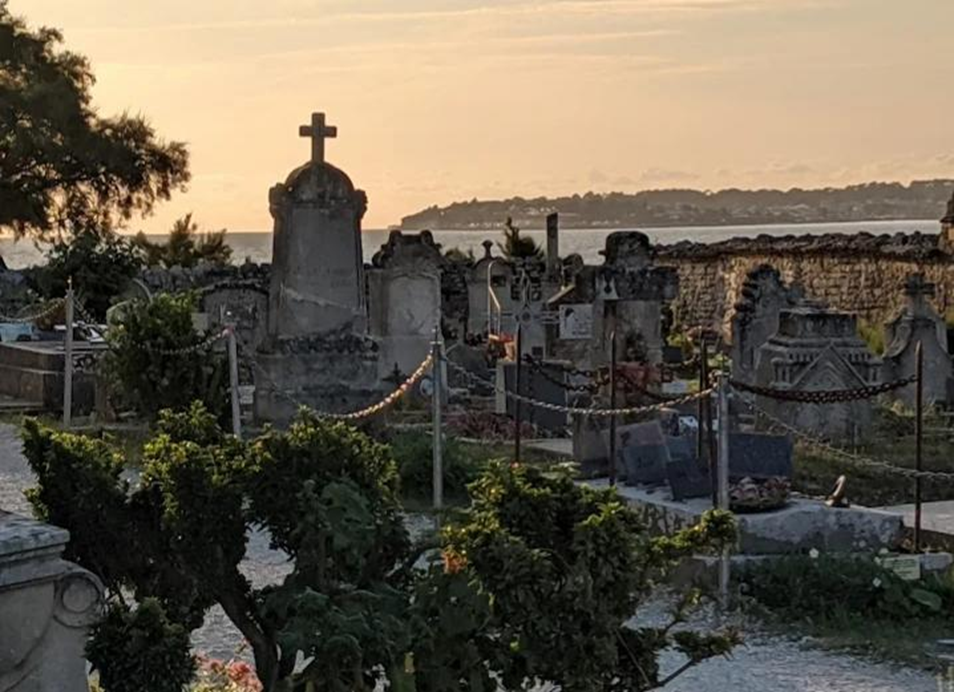
The “ La Formule” Cipher was created to provide instructions in French, about retrieving an alleged treasure buried on Oak Island. Compendium Investigations has concluded that this document has the same problems as the other documents associated with Don Ruh. There was a message on the side of the document that is very interesting. It appears to be a eulogy for a Mr. Hayward that refers to a line in Paul Valery’s poem, “Le Cimetiere Marin”, or The Graveyard by the Sea. The poem contains the line “The wind is rising; we must attempt to live”. The location is a seaside area that has a cemetery and a temple. The exact location of Valery’s graveyard is unknown, but it is suggested that it could be at Sainte Radegonde Church in Talmont sur Gironde. The Church has a graveyard located next to it that overlooks the ocean creating a very picturesque setting. In reviewing the location of Château de Talmont in Talmont Sainte Hilaire, it has no graveyard and does not overlook the sea. It appears that the eulogy was part of the novel that was being written and later referenced to Talmont Sur Gironde. More interesting, the name of Jim (Tim) McGinnis was on “La Formule” owned by Don Ruh. It appears clear to this author that Mr. McGinnis was the source of details regarding Oak Island that appeared on both the “Oak Island Map’ and “Le Formule” Cipher. It is this author’s sincere hope that these fabricated documents, once and for all, are accepted as fraudulent and not cited as evidence.
Please follow our weekly episode analyses during Season 13, along with articles from the original “Compendium/Blockhouse Blog”, and special investigations and features involving Oak Island. Feel free to reach out to us for questions, comments, information and any theories to our email, theoakislandcompendium@gmail.com
Good day from Daniel of the Compendium!
THE OAK ISLAND COMPENDIUM © 2026


